

25 Feb Spanish Voice Over. Break into the North American market
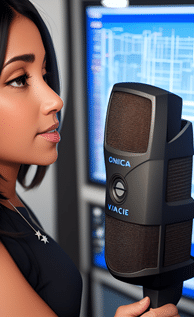
The Spanish voice over market has been growing rapidly in recent years, with an increasing demand for high-quality voice over services in both accents, Castilian Spanish (from Spain EU) and Latin American neutral Spanish (EEUU and Latinoamerica). This article will explore the characteristics of the Spanish voice over market and its peculiarities in the North American market. This will be very useful for your future as a Spanish voice talent in the biggest voice market services in the world.
Two main Spanish accents (Castilian-Iberian-EU and LATAM)
Firstly, it is important to note the differences between Castilian Spanish and Latin American neutral LATAM Spanish. Castilian Spanish, or iberian, also known as European Spanish, is the official language of Spain and is spoken by approximately 48 million people. Neutral Latin American (Latam) Spanish, on the other hand, is a variant of Spanish used throughout Latin America, part of Spain and the United States, and is characterised by its lack of regional accents or dialects. This makes it the preferred variant for international audiences, as it is easier for English speakers to understand and more widely spoken.
Cultural sensitivity and ethnicity. Adjust your speech style in Spanish voice over Services
The Spanish-speaking population in the United States is diverse, with individuals from a wide range of countries and cultural backgrounds. It is important for voice over artists to be aware of these cultural differences. And to be sensitive to them when delivering their voice-over services. Always ask your clients what Spanish accent they are looking for (Spain, USA or Latam). This will avoid many problems and waste of time and money.
If, like me, you work with both neutral accents, you can ask your clients about the type of audience their message is aimed at. This will give you a very good reputation with them. Once again, good cultural preparation is one of your best allies when looking for work, or offer your voice service as a voice talent in the US.
For example, when working on a voice-over project that targets the Mexican-American community, it is important to be aware of the cultural differences between Mexico, the United States and also the other countries in its orbit. The tone, pronunciations and style of the voice over may need to be adjusted to ensure that it resonates with the target audience. Similarly, when working on a voice project that targets the Cuban-American community, it is important to be aware of the cultural differences between Cuba and other Latin American countries. Above all in prosody, musicality and word pronunciation. Check out the video below for a perfect neutral Spanish latam accent.
Authenticity in your voice recordings and self direction
Another peculiarity is the importance of authenticity. Many Spanish-speaking individuals in the United States have a strong connection to their cultural roots and may be more likely to respond positively to a voice artist or actors who speaks their regional variation of Spanish. For example, a Mexican-American may prefer a voice over artist who speaks with Mexican Spanish accent in south´s states, while a Puerto Rican-American may prefer a voice over artist who speaks Puerto Rican Spanish Accent for the West coast. It is therefore crucial to know the target audience for our voice recordings before we make them. It will save us time, heartache and unwanted unpleasantness.
Spanish Neutral Latam
The main goal of using Spanish Neutral Latam is to create a product that can be easily understood by a wide audience of Spanish speakers, regardless of their country of origin. To achieve this, speakers of Spanish Neutral Latam generally avoid using words or expressions that are specific to a particular region, and instead use more universal vocabulary and pronunciation.
Spanish Neutral Latam is also notable for its pronunciation, which is generally clear and easy to understand. Vowels are typically pronounced distinctly, and consonants are pronounced with clarity and precision. This is in contrast to some regional variations of Spanish, which may feature more muted or swallowed pronunciation.
Learning how to pronounce a perfect Latin American Neutral in your Spanish voice-overs with this video
Latino Grammar and syntax to improve your voice service
Another characteristic of Spanish Neutral Latam is its grammar and syntax, which is generally standard and adheres to formal Spanish language rules. This means that speakers of Latam generally use correct verb conjugation, noun-adjective agreement, and other grammar rules that are standard in the Spanish language.
In general, Latam is a variant of Spanish designed to be easily understood by a very wide audience of Spanish speakers throughout the Americas. Latam is likely to remain a popular choice for Spanish voice over work and other Spanish language media.
Enjoy different Spanish accents in this funny video
Castilian EU (Spain) Latam (The USA and Latinoamérica). Two worlds in one
One way to ensure high-quality services is to work with experienced voice over artists who are fluent in both Castilian Spanish and Latin American neutral Spanish. These artists should also have a strong understanding of the cultural differences between different Spanish-speaking populations, and be able to deliver Spanish voice over services that are culturally sensitive and authentic.
English with Spanish accent voice over
In neutral Latin American Spanish, the pronunciation of English may vary depending on the speaker and their proficiency in the language. However, some general pronunciation guidelines for English in Latin American Spanish include:
- Pronouncing English vowels in a similar way to Spanish vowels. For example, the English «e» sound is often pronounced as a Spanish «e» (like in the word «pet»). And the English «i» sound is often pronounced as a Spanish «i» (like in the word «sit»).
- Paying attention to English consonant sounds that do not exist in Spanish, such as the «th» sound (as in «think» or «three»). This sound is often difficult for Spanish speakers, and may be substituted with a «t» or «s» sound.
- Being mindful of English stress patterns. English words typically have stress on one syllable, while Spanish words have stress on one of the last three syllables. English words that are borrowed into Spanish may retain their original stress pattern, or may be adapted to follow Spanish stress rules.
- Overall, pronunciation of English in neutral Latin American Spanish can vary widely depending on the individual speaker and their language background.
As we have already said, it is not a bad thing that we should make it very clear what kind of accent and pronunciation our clients want.
As a professional Spanish voice over talent, you should consider these strategies
- Build your skills and portfolio: To become a successful Spanish voice talent in the USA, it is essential to have a strong portfolio of work and to continually develop your skills. This may involve taking voice over classes or workshops, working with a voice coach, or practicing on your own. Additionally, building a portfolio of work that showcases your range and versatility is critical to attract potential clients. If you haven’t got good jobs yet, make an effort to create audio demos that make you look like one. Your clients will value your quality of voice and performance and will probably not wonder if you actually worked or not for those brands.
- Join a professional association: Joining a professional association for voice over artists can be an excellent way to network with others in the industry and learn about new opportunities. The World Voices Organization and the Society of Voice Arts and Sciences are two examples of professional associations that offer resources and support to voice over artists.
- Work with a talent agency: Talent agencies can help connect you with potential clients and provide guidance on pricing and contracts. It is important to do your research when selecting a talent agency to ensure they have a good reputation and will represent you well. Another way to ensure high-quality services is to work with a reputable voice over agency.
These agencies typically have a pool of experienced voice over artists who can deliver high-quality services that meet the needs of a wide range of clients.«The problem with some voice-over agencies is that commissions and subscriptions are high and competition is fierce. We only recommend them to start with if you already have a Pro Home Studio and are very fast responding castings. Some online VO talents agencies are The Voice Realm, Voice123, Bodalgo, Voices.com and many more. You almost certainly won’t get rich from them but hopefully you will get a job that will embellish your CV and public image.»
- Market yourself effectively: Creating a strong online presence is critical for marketing yourself as a Spanish voice talent. This may include building a website, creating a professional demo reel, and using social media to showcase your work and connect with potential clients.
- Specialize in a specific niche: Developing expertise in a particular area of voice over, such as commercials or e-learning, can help differentiate you from other voice talents.
- Attend industry events: Attending industry events, such as voice over conferences or workshops, can be an excellent way to network with others in the industry and learn about new opportunities. This can also help you stay up-to-date on trends and best practices in the industry.
- Be persistent: Pursuing opportunities as a Spanish voice talent can be challenging, but persistence is key. It may take time to build your portfolio and reputation, but with hard work and dedication, you can achieve success in this field.
In conclusion, pursuing opportunities as a Spanish voice talent in the United States requires a combination of skills, experience, and marketing savvy. By developing your skills, building a strong portfolio, networking with others in the industry. And being persistent, you can establish yourself as a successful Spanish voice talent in this growing market.
I have been trying to do it every day for a long time and little by little I am making my way. Here are some examples of my voice-over work in neutral Latin American Spanish for the North American market.
No Comments